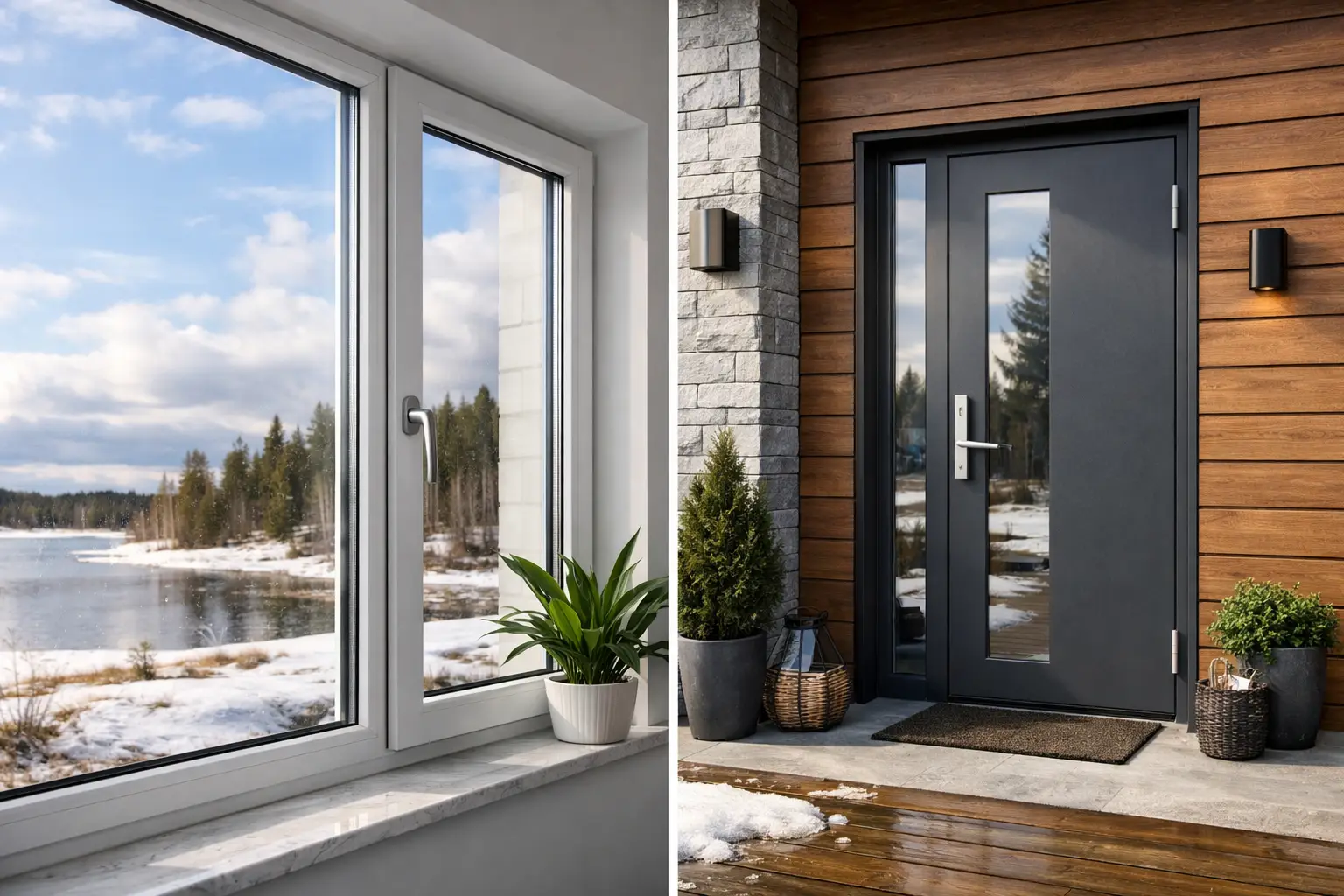
If it feels cold near the window in winter, street noise carries into the room or the front door no longer closes firmly, it’s not just a matter of comfort. Windows and doors affect a building’s thermal performance, energy costs, security and how well the rooms can be used every day. That’s why it pays to choose them as a whole – a good profile, the right glazing and expert installation need to support each other.
In Estonia, the solution has to cope with wind, rain, frost, temperature swings and humidity. At the same time, people want ever larger glazed areas, more light and a clean architectural result. The right choice is not always the most expensive system, but one that suits the building, its location and how it is used.
Start with the building, not the window colour
Windows and doors are not a one-size-fits-all product chosen only by size and looks. In a wooden house being renovated, the main goals may be to reduce heat loss and keep the character of the façade. In a new energy-efficient house you also need to consider ventilation, shading, large glazed areas and the overall energy solution.
In an apartment building, sound insulation is often decisive, especially near a busy street or railway. In a commercial building, school or public space, fire safety, heavy use, accessibility and project requirements come into play. So before asking for a quote, think about which problem the new windows or doors need to solve.
Measuring is much more than checking the width and height of the opening. A specialist assesses the wall construction, the window’s position in the insulation layer, water drainage, the reveal finish and fixing options. These details decide whether the new window will still perform as promised years from now.
PVC or aluminium: the material defines the possibilities
PVC windows are common in Estonian homes for a reason. A quality PVC profile insulates well, is easy to maintain and reasonably priced. It suits houses, apartments and many renovation projects where the aim is to cut heating costs and get a reliable result without unnecessary compromises.
Aluminium is stronger and allows larger glazed areas, slimmer visible profiles and more complex structures. That’s why it is often used for sliding and folding doors, glass façades, commercial premises and modern houses. Aluminium solutions are generally more expensive, but for a wide door opening or a façade it can be a technically justified choice rather than just a design preference.
The material doesn’t have to be the same throughout the building. For example, PVC windows can work perfectly in bedrooms and ordinary openings, while a wide sliding door to the terrace or a tall glass corner needs an aluminium system. This way you can combine energy efficiency, durability and budget.
Glazing matters more than it first seems
Glass makes up a large part of the window area, so the choice of glazing directly affects thermal insulation, sound insulation and the risk of overheating. Triple glazing is the standard choice in an energy-efficient building, as it reduces heat loss and makes it more comfortable to be near the window.
If the house is in a noisy area, standard triple glazing alone may not be enough. Sound insulation is improved with panes of different thicknesses, laminated glass and the right glazing build-up. It is important to assess the whole window, including the frame, seals and installation – noise will find even a small air leak.
For large south- and west-facing glazed areas, it’s worth discussing solar control. Solar control glass can reduce summer heat gain, but it also affects light transmission and the use of solar heat in the cold season. In some houses, external blinds or awnings are the better solution; in others, a combination of these with suitable glazing.
An entrance door must keep the heat in and handle daily use
With an entrance door, people often look first at the colour, glazing and handle. These matter, but the real value of a door is determined by the stability of its construction, insulation, locking, seals and correct installation. A door that sags or doesn’t close tightly can make even a well-insulated solution uncomfortable.
A house’s entrance door has to withstand constant opening, moisture and temperature changes. Whether there is a canopy, whether the house is on a windy plot and whether the door is directly exposed to rain all affect which construction to choose. At the entrance to an apartment building or office there is also heavy use, so a strong profile, a reliable door closer and a well-thought-out passage are especially important.
When choosing a terrace or balcony door, ask how it will actually be used. If the door is only opened in summer, a standard balcony door may be practical. If you want to connect the living room and terrace often and open up a large part of the wall, a sliding or folding door gives more freedom – but it means a larger investment and requires very precise installation.
Installing windows and doors is not a side service
Even the best window won’t do its job if it is installed incorrectly. The window must be well insulated, airtight on the inside and weatherproof on the outside. A joint simply filled with foam may look fine at first, but over time moisture, wind and structural movement can weaken it.
Installation also involves the window sill, flashings, reveals and exterior finishing. This work affects the result and whether the customer has to find separate contractors later. A full service is especially valuable in renovation, where removing the old window can reveal hidden damage or uneven openings.
Koduaken combines design, measuring, manufacturing, installation and finishing so that responsibility isn’t split between several parties. This makes the process clearer for homeowners and for managers of larger construction projects.
What to check when comparing quotes
When comparing window quotes, don’t look only at the final price or the number of panes. Find out which profile system is offered, the glazing properties, the window’s thermal transmittance, the hardware, the seal solution and exactly what installation includes. Also ask whether the price covers removing the old window, waste disposal, window sills, flashings and finishing the reveals.
For an entrance door, check the type of lock, security, threshold, opening direction and whether the chosen handle and closer suit the level of use. For large sliding doors, ask about threshold height and maintenance too. A clear quote describes the solution so that the customer understands what they are buying and which work is not included in the price.
A good window or door is not just a new frame in the wall. It’s a decision that affects the warmth, quietness and everyday comfort of your home for decades. Before making your final choice, discuss your building’s specifics with a specialist – that way you’ll arrive at a solution that looks good, withstands the Estonian climate and works as it should every day.
Want a warmer, quieter home? Get in touch
📩 Request a free quote today! We are happy to advise you in English.